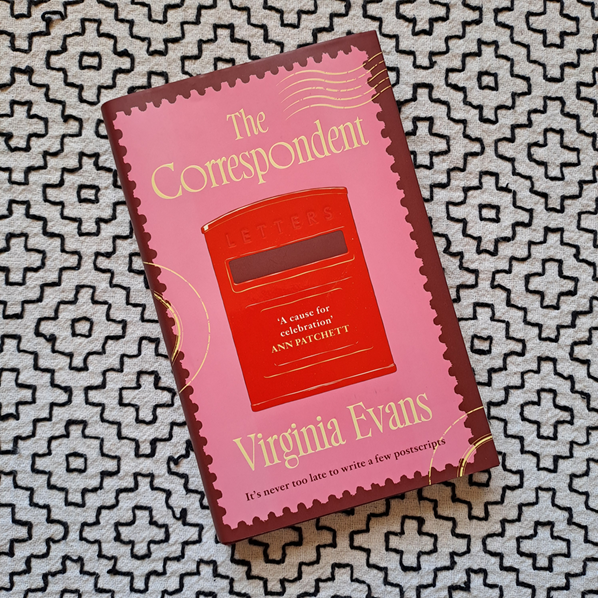
I hadn’t intended for The Correspondent by Virginia Evans to be my first read of the year. (It was going to be Sad Janet, coming soon!) But The Correspondent kept popping up on my radar. I saw it mentioned in some Substacks that I read, and then referenced in The Sunday Letter Project which I signed up to. The link to all of this was ‘going analogue’. 2026 is supposedly the year of going analogue, getting offline, going back to basics. I’m here for it! Plenty of folk in this world need to step away from the internet! The reason this links to The Correspondent is because it is an epistolary novel with a main character who has spent a lifetime handwriting letters.
The Correspondent
Sybil Van Antwerp is 73 when we meet her. She is a retired legal clerk living alone in Annapolis, Maryland. Through the variety of letters and their recipients, we begin to learn all about the backstory of her life. Her children, ex-husband, “work husband”, her formidable career, and her own lineage. Sybil thinks nothing of writing to famous names and authors, just as she writes to a neighbour just a few houses away from her. You become as invested in the lives of the recipients as you do in Sybil’s.
Rosalie, her best friend of forever, has a disabled son and ailing husband. Young Harry Landy is a gifted child suffering terribly with his mental health, school bullies and undiagnosed neurodivergence. Theodore Lubeck, her neighbour and admirer, is guilt ridden about his escape from Nazi Germany. Entwined around these are comedic interchanges about the politics of the local Gardening Club, auditing university lectures, and her faultering computer literacy. Overarching all of this, is a terrible, tragic moment that has shaped Sybil’s life, her relationship with her children and it begins to unlock the puzzle of why Sybil is the way she is.
Easy Reading
One thing that really struck me while reading The Correspondent was that while set in America, and written by an American author, I read Sybil with quite an English voice. There was something about her matter-of-fact bluntness and emotional repression that felt so British to me! The novel is crafted entirely of letters, emails, postcards and the occasional newspaper clipping. It’s therefore easy reading, with no letters being longer than 3-4 pages. I sailed through it, and the small passages do wonders for an attention deficit brain. I read it across three evenings. I’m in awe of its structure too. The letters read smoothly, and unfold naturally over time. To have constructed this must have been so intricate. Each narrative thread needs the right amount of attention in the right timeframe, and they must all have been jostling for attention. It’s very well done and a wonderful book.